
The two-day event that put British punk rock on the map
100 Club Punk Special in September 1976 heralded a new era in popular music

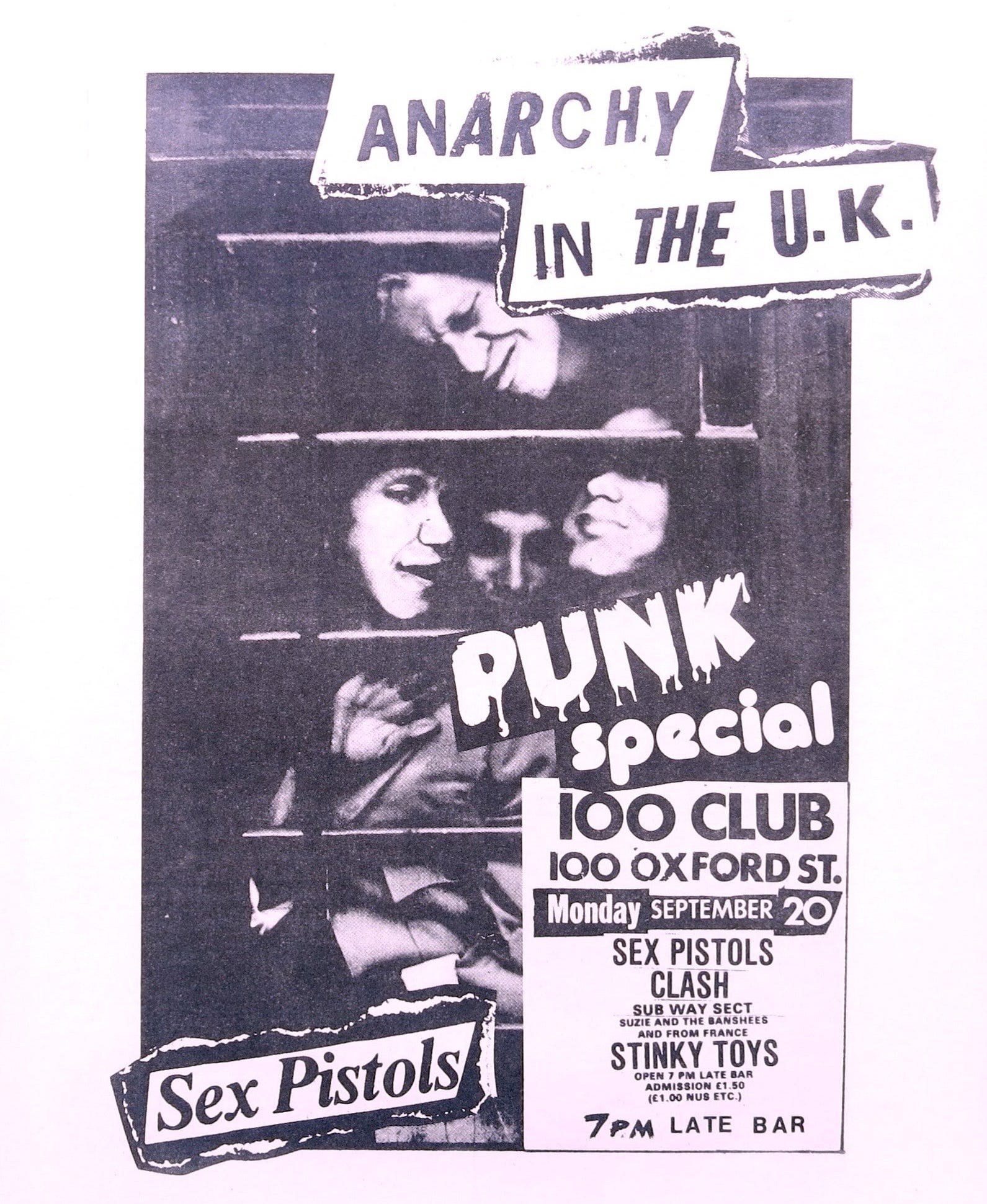
It was the first gathering of the British punk rock tribes, and as such it was a weird combination of electrifying, underwhelming, and pointlessly stupid. Of such things are legends made.
On September 21 and 22, 1976, the 100 Club Punk Special in London showcased the emerging stars of the British punk scene along with some bands that were so new they weren’t really even bands. While the shows attracted several hundred patrons over two nights and raised punk’s profile in the U.K. beyond the music press, it’s fair to say that quality control took a back seat to energy, intensity, spontaneity, and alcohol.
The 100 Club Punk Special was the brainchild of concert promoter Ron Watts, who was supported by Sex Pistols manager Malcolm McLaren, the sloganeering owner of a clothing shop called Sex, and Caroline Coon, a political activist, punk rock evangelist, and writer for British music weekly Melody Maker.
Undisputed headliners of the two-day event were the Sex Pistols, who had been lighting little bonfires of punk DIY attitude through the spring and summer of ‘76. Their incendiary performances in small venues inspired the formation of many bands who saw the future of music in McLaren’s hand-selected, snarling gang of reprobates and fashion plates.
The lineup for the shows was:
Monday evening, September 20
Subway Sect
Siouxsie and the Banshees
The Clash
Sex Pistols
Tuesday evening, September 21
Stinky Toys
Chris Spedding & the Vibrators
The Damned
Buzzcocks
As luck and YouTube would have it, audio exists for many of the performances at this landmark punk festival. Not surprisingly, it’s a mixed bag.
Memories differ among people who were at the first show as to whether Subway Sect or Siouxsie and the Banshees opened the show. For our purposes we’ll assume it was Subway Sect. I couldn’t find audio of their set — which was the band’s first performance together. A journalist named The Baker who at the time of the show was helping both Subway Sect and The Clash with gear transportation and rehearsals recalls the new band’s reality check when they heard The Clash running through their set with commitment and polish:
If we had been scared shitless beforehand, we were crapping our trousers now. The Subways’ gathered round and spoke in hushed voices at the dismay and embarrassment of being on the bill with such seemingly professional musicians (and this wasn’t even the Pistols!) There we were, with our tiny little amps, not even able to tune the instruments or have a sound check. [Guitarist] Bob Simmons was overwhelmed at how proficient The Clash appeared and how bad the Subways’ were going to look. [Drummer] Paul Smith was convinced the audience was going to think it was a joke. [Vocalist] Vic [Godard] seemed to suddenly realise that he was going to be singing in public for the first time. The certainty that it was going to end in an embarrassing disaster raised the brief suggestion of pulling out, but was quickly dismissed. There was of course, no way out – they had been advertised on the bill and Vic had already signed the papers at Malcolm’s office behind the Edgware Road the week before.
Tough mindset to have going into your first gig! Fortunately, Subway Sect apparently managed to avoid the embarrassing disaster they dreaded. Though the Sect would only last a couple of years, the group would be cited as an influence by indie bands for decades. Theirs is an interesting story, which I’ll write about sometime soon.
The second act of the Monday show featured Siouxsie Sioux torturously shouting 24 minutes of the Lord’s Prayer, backed by a guitar, bass, and Sid Vicious (the future Sex Pistols bass player) on drums. Here’s a recollection of the performance by Nick Haines, who a year later would form the punk band The Fence:
A drum beat. Nothing flashy, a repetitive rhythm that was joined by the sound of a bass and guitar inexpertly played. What really caught the attention was a girl’s voice singing, or rather intoning over the backing:
“Our Faaaver, who art in He-vun!” she sang hitting notes both sharp and flat; “Twist and SHOUT” she exhorted. It was fascinating and challenging for a while, interesting for a little longer, then became rather tedious. Interest amongst my fellow patrons seemed to wane too and the conversations around myriad tables took over as Siouxsie’s debut descended into indifference.
And yet Siouxsie got gig offers before the night was out! Less than two years later, Siouxsie and the Banshees would crack the British top 10 singles chart with Hong Kong Garden and become U.K. chart fixtures for the next two decades. I’ll be writing about them as well.
The Clash followed with a tight, spirited 11-song set that demonstrated the virtues of rehearsal and commitment. You can hear the crowd’s excitement in the YouTube video below.
It was only the Clash’s sixth show since forming a few months earlier, and their first without their original fifth member (and one of three guitarists), Keith Levene. They made a huge impact, according to The Baker:
Suddenly, The Clash came out, plugged in, and launched into their first number at breakneck speed. Watching their set with neck hairs raised and mouth open from the side of the stage I couldn’t help being overwhelmed at the blinding, heart-racing spectacle they made. Guitars flashing, colours blurring, speed-crashing deafening punk rock – the Clash gave it to the audience in torrents, number after number.
Who can follow that act? Only the band that single-handedly sparked the punk revolution: the infamous Sex Pistols, who tore through a 13-song set before a now-packed 100 Club. The audio is below:
The second night of the festival was far less interesting musically, opening with a French punk band named Stinky Toys that never really went anywhere and apparently weren’t recorded at the event. They were followed by Chris Spedding and the Vibrators. Spedding, 32 years old at the time, was a well-respected session guitarist and producer who hardly was “punk.” But he had punk connections, having produced some demos for the Sex Pistols in May 1976. Also, he had dated music promotor Nora Forster, the mother of Slits singer Ari Up. Forster would go on to marry Pistols singer John Lydon.
Then things fell to shit because Sid Vicious thought it would be funny to throw a glass against a pillar during the Damned’s set. The glass shards injured several people in the audience and caused one young woman to lose sight in one eye. The vibe changed instantly, Haines recalls:
By this time, policemen, plain clothes and in uniform, are mingling with the audience. Everyone feels uncomfortable. People have been hurt quietly. There wasn’t a fight, and nobody knows exactly what happened.
Suddenly, with no more impact than a moving dark blue flash, five uniformed police surround a figure by the bar. He looks surprised. Blank. He’s guided to the exit and arrested. It’s Sid Vicious, Siouxsie and the Banshees’ drummer.
Good job, asshole.
A woman named Michelle who attended the show adds:
My cousin and I got small bits of glass showering over our face but it was a friend I’d met at Blitz, Cherry (I think that was her name), who got glass in her eye. …Obviously the atmosphere changed suddenly. There was blood, screaming, crying and ambulances and police. It calmed down after she was taken away but everybody started to leave. Souixsie stood on the stairs and asked people to stay and support The Buzzcocks.
Though it was marred by senseless violence at the end, the 100 Club Punk Special remains a touchstone of the British punk movement that is remembered to this day.
Siouxsie and the Banshees, The Clash, and the Sex Pistols - not bad for a Monday night!
Loved the Clash, I saw Chris Spedding playing with Robert Gordon Slim Jim Phanton and Glenn Matlock. Chris Spedding also did a stint with Stray Cats bandmates minus Brian Setzer. The night I saw C Spedding with Robert Gordon was great. The record with The Stary Cats folks was underwhelming. Sis Vicious was a tool. Nice Article.