
The Jam brilliantly merged mod style with punk intensity

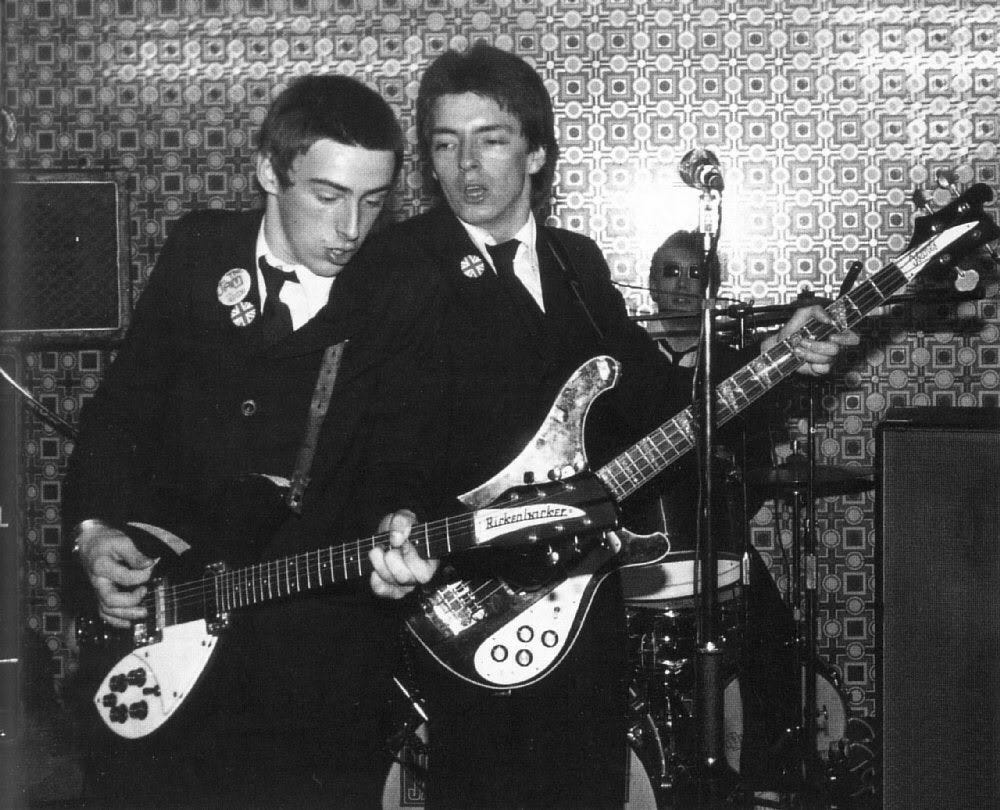
If you asked music fans in the U.K. which four bands should be on the British punk rock Mount Rushmore, some might respond, “What the fuck is Mount Rushmore, mate? Are you havin’ a laugh?” Others are likely to name the Sex Pistols, The Clash, The Damned, and The Jam (with votes for Buzzcocks).
The thing is, there’s an argument that The Jam wasn’t even a punk band! I hate to go down the rabbit hole of trying to define “punk,” or the even deeper rabbit hole of assigning bands and music to categories, but consider that:
Then-bass player Paul Weller and drummer Rick Buckler joined musical forces in 1972, four years before what is considered Year Zero (1976) in British punk. Pub rock, punk rock’s predecessor and partial inspiration, was still in its infancy! Bruce Foxton would come on board by the mid-’70s, assuming bass duties and harmony/secondary vocals while Weller switched to guitar, completing the classic Jam lineup.
During a time when Joe Strummer was singing, “Phony Beatlemania has bitten the dust” and punk in general sneered at the past, The Jam were embracing and emulating British music and culture from the ‘60s, particularly The Who, The Kinks, and mod fashion. Weller even used a Rickenbacker guitar to approximate the sound Pete Townshend was getting with his Ric. And what other “punk” band can you name whose members wore suits on stage?
The Jam’s calling card was tight, melodic, songs with ringing harmonies, none of which typically are associated with punk. As a songwriter, Weller had the touch, and his vocals combined with Foxton’s created a unique and identifiable sound.
Here’s another way The Jam differed from virtually every punk band: They were consistently popular and successful in the U.K. over several years. The Sex Pistols had a No. 1 album (Never Mind the Bollocks) and three top 10 hits (God Save the Queen, Pretty Vacant, Holiday In the Sun) before breaking up. The Damned had one single (Love Song) crawl to No. 20 in the U.K. The Clash did well on the charts: Five of the band’s albums breached the U.K. top 20 from 1977 to 1982, and their first nine singles (from 1977 through 1980) cracked the top 40, with London Calling reaching the highest slot at No. 11.
Commercially, however, The Jam were in another league. From 1977 through their breakup in 1982, The Jam had four U.K. No. 1 singles, nine singles in the top 10 (in other words, nine singles that charted higher than London Calling), and 24 in the top 40. Their peak position for each studio album was (starting with the debut album) Nos. 20, 22, 6, 4, 2, 1. Not a bad trend!
Then, in 1982, The Jam broke up — or, more accurately, Weller announced he was ending the band because he wanted to pursue sounds he felt he couldn’t attain with this tight three-piece group he led to the top of the British music world. The news was not well-received by Foxton and Buckler, who wouldn’t talk to Weller for decades. (Weller would go on to co-found The Style Council, which landed seven singles and six albums (including a No. 1) on the U.K. charts in the 1980s.)
The Jam’s popularity in the U.K. was never replicated in America, where the band barely had a commercial or physical presence. Their few forays across the pond focused on the east and west coasts and television. (Here they are on Fridays, the short-lived Saturday Night Live clone, in 1980.) It didn’t help that The Jam — like The Kinks, XTC, Squeeze, and (later) The Smiths — frequently sang about British topics from a British viewpoint, when the average American yahoo preferred songs about drinking, driving, and more drinking.
But why is The Jam viewed as a punk band by so many? Part of the reason is because the band’s rise in popularity (starting in 1977) came just as punk was peaking. Everything that was played at a fast tempo and with some attitude was being called punk. The media and public were getting lazy with their labels.
Another reason, though, is that The Jam exuded a ton of punk aggression and heat, particularly in the early years. Getting back to the question of “what is punk,” I think we could agree that energy and intensity are among the genre’s most critical elements (along with disdain for societal norms). The Jam certainly checked those boxes. Another punk box they checked was writing and singing about societal ills and economic problems, topics frequently addressed by The Clash and the Sex Pistols.
Punk or no punk, for a three-piece unit The Jam was a musical powerhouse. As a guitarist, Weller wasn’t going blow anyone away with licks and runs, but the slashing chords he hacked out on his Ric brought a feral bite to the band’s sound. Underneath Weller’s chords, Foxton and Buckler combined to create an urgent rhythm section. And while The Jam’s full “modness” was palpable on programs like Top of the Pops and Old Grey Whistle Test, there are early, live clips of the band in British clubs that scream out punk.
Like this one below. Here’s The Jam playing their first two singles (In the City and All Around the World) and an old cover song at the Electric Circus in Manchester, either in May or June 1977.
They’ve got the crowd into it! You can see the influence of Dr Feelgood on The Jam. Like Feelgood guitarist Wilko Johnson, Weller and Foxton are in near-constant motion on stage, skittering, sweating, and looking like they are deadly serious about what they’re doing. This clip catches The Jam on the cusp of a six-year run of glory.
Well Done Ghoul!! Perfect!
Signd Wumpy Rutherford
Long live The Jam. In the words of Tears for Fears “Kick out the Style, bring back The Jam.” To the Rock Gods — Please please please, include The Jam as a candidate for the Rock and Roll Hall of Fame next year. (Editorial note: I love the Style Council, but not as much as The Jam)